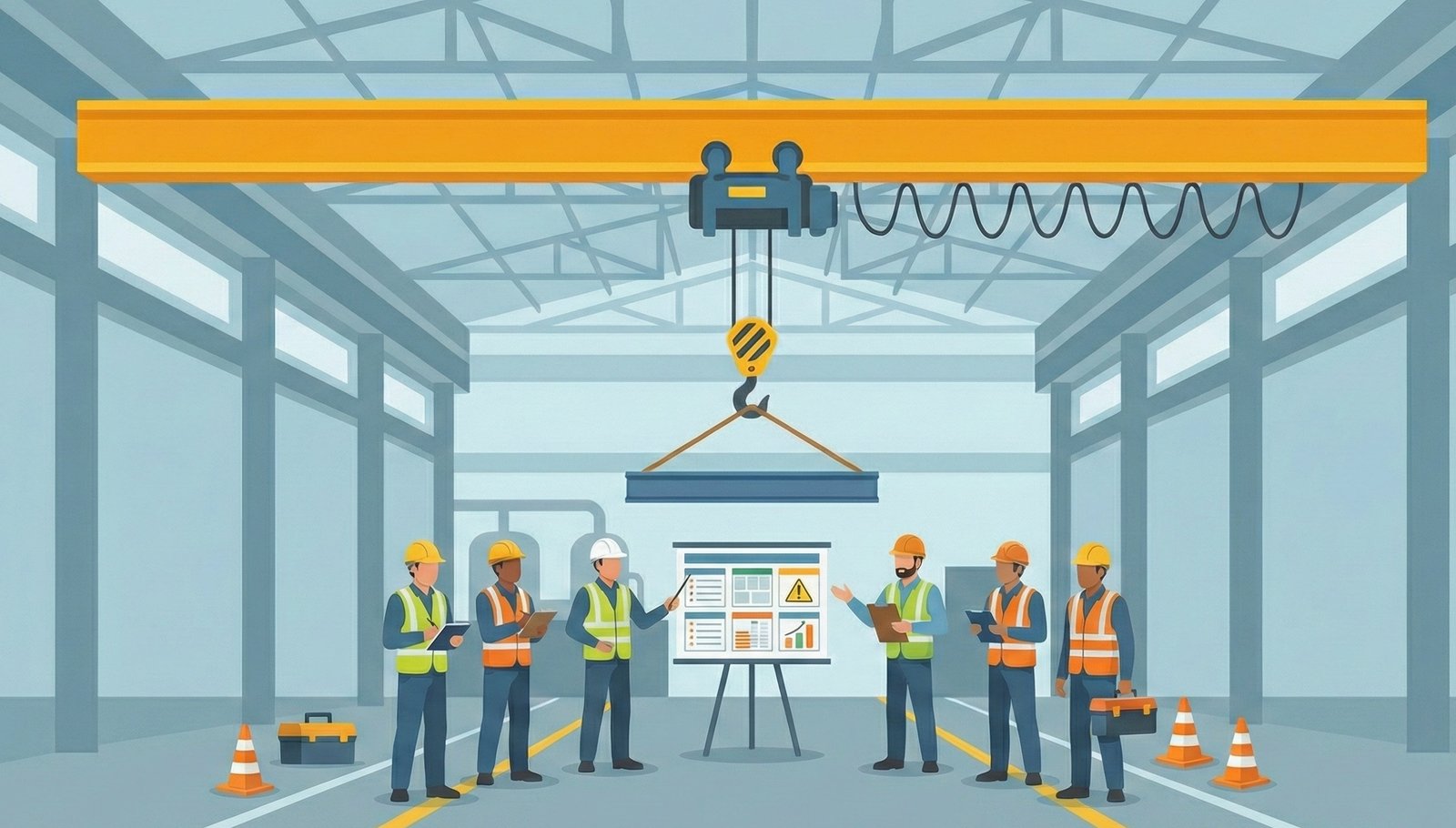
Top 10 EOT Crane Safety Rules
Operating an Electric Overhead Traveling (EOT) crane is a responsibility that demands 100% attention. Accidents often happen due to negligence or bypassing safety protocols. Here are the top 10 golden rules every crane operator and floor manager must follow.
1. Never Lift Loads Over People
This is the cardinal rule of crane safety. Never move a suspended load over personnel. If a load must be moved, clear the area first. Sound the alarm to warn workers.
2. Do Not Side Pull
Cranes are designed to lift vertically. Side pulling puts excessive stress on the wire rope, rope guide, and drum grooves. It can also cause the load to swing dangerously once lifted.
3. Check Limit Switches Daily
Before starting the shift, test the upper and lower limit switches. These are your fail-safes to prevent the hook block from crashing into the drum (two-blocking).
4. Inspect Rigging Gear
Check slings, shackles, and hooks for wear, cuts, or deformation. A crane is only as strong as its weakest link. Never use damaged rigging hardware.
5. Know the Load Weight
Never guess. Ensure the load is within the rated capacity (SWL) of the crane. If the crane has a load display, monitor it. Overloading is a primary cause of structural failure.
6. Center the Hook
Ensure the hook is centered directly over the load's center of gravity before lifting. Off-center lifting will cause the load to swing violently when raised.
7. Avoid Shock Loading
Lift slowly. Taking up the slack in the wire rope suddenly (shock loading) can exert forces far greater than the actual weight of the load, potentially snapping the rope.
8. Do Not Leave Loads Suspended
Never leave a load hanging on the hook unattended. If you must leave the controls, lower the load to the ground first.
9. Use Hand Signals
In noisy environments, standard hand signals are vital. Ensure the operator and the rigger understand the same set of signals before the lift begins.
10. Lockout / Tagout (LOTO)
During maintenance, always isolate the main power supply and lock it. Never rely on the pendant emergency stop button alone for maintenance safety.
Safety First: If you feel a lift is unsafe, STOP. It is better to delay a job than to risk an accident.