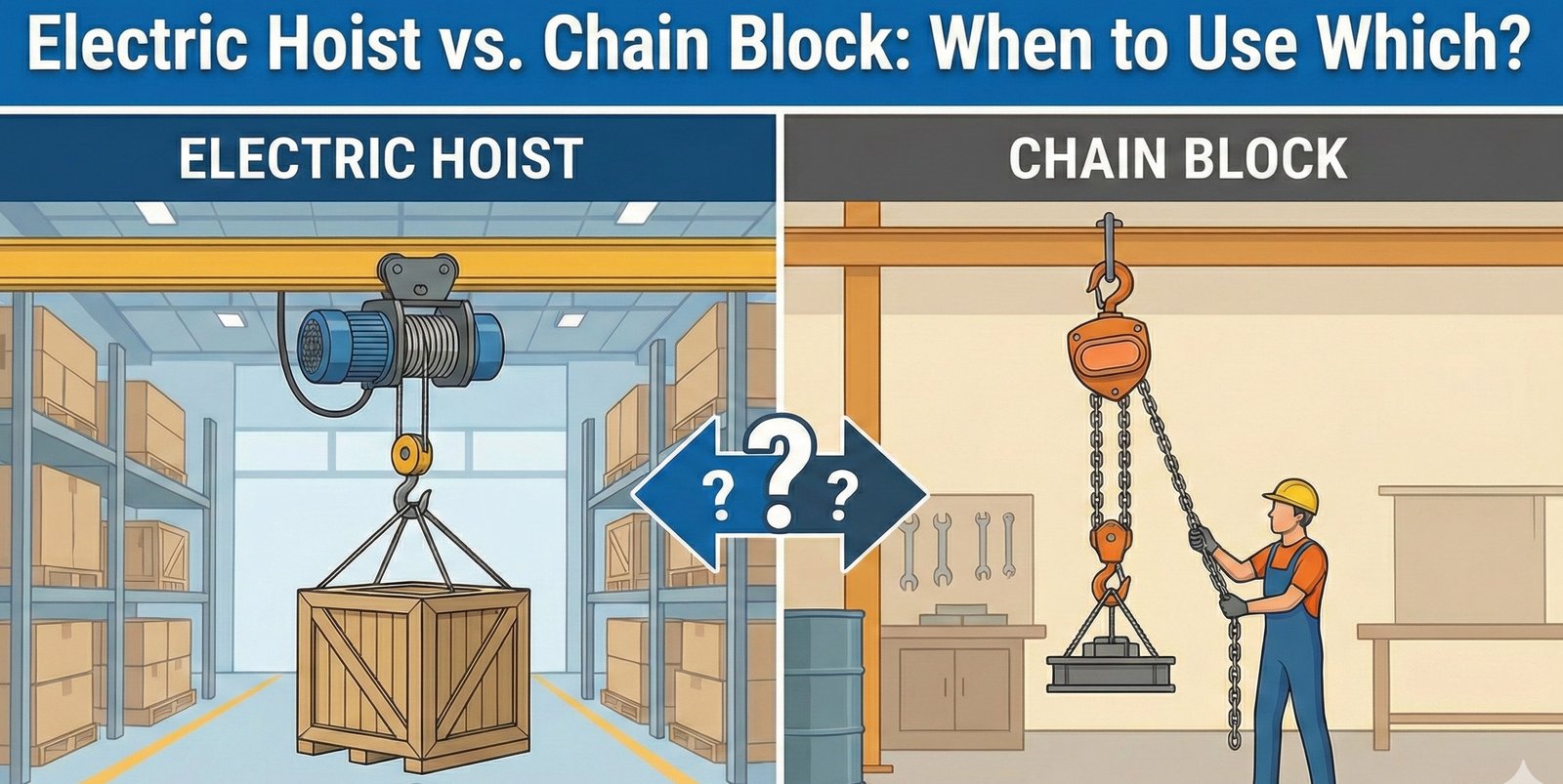
Electric Hoist vs. Chain Block: Which Do You Need?
Choosing the right lifting equipment depends on three main factors: how heavy the load is, how often you lift it, and how fast you need to move it. Let's compare the two most common options: the Manual Chain Block and the Electric Wire Rope Hoist.
1. Manual Chain Block (Chain Pulley Block)
A simple, mechanical device operated by pulling a hand chain. Gears multiply the force, allowing a person to lift heavy loads.
Pros:
- Cost: Extremely cheap. A 1-ton chain block costs a fraction of an electric hoist.
- Portability: Lightweight and requires no electricity. Ideal for construction sites or remote areas.
- Precision: Excellent for very slow, precise positioning (e.g., aligning an engine).
Cons:
- Speed: Very slow. Lifting 1 meter might take 30 seconds of pulling.
- Effort: Physically demanding for the operator.
- Duty Cycle: Not suitable for frequent lifting.
2. Electric Wire Rope Hoist
A motorized hoist that uses a wire rope wound around a drum. It is the standard for most EOT cranes.
Pros:
- Speed: Fast lifting speeds (4 to 8 meters/minute or more).
- Productivity: Can perform hundreds of lifts per day without operator fatigue.
- Capacity: Available in capacities up to 100+ tonnes.
Cons:
- Cost: Significant investment.
- Infrastructure: Requires a power supply and a beam/crane structure to run on.
3. The Middle Ground: Electric Chain Hoist
If you need the ease of electricity but the compactness of a chain block, consider an Electric Chain Hoist. They are cheaper than wire rope hoists and great for loads under 5 tonnes.
Comparison Table
| Feature | Manual Chain Block | Electric Hoist |
|---|---|---|
| Lifting Speed | Very Slow | Fast |
| Frequency of Use | Occasional | Continuous |
| Power Source | Human Muscle | Electricity (3-Phase) |
Verdict: Use a Chain Block for maintenance (lifting once a month). Use an Electric Hoist for production (lifting every hour).