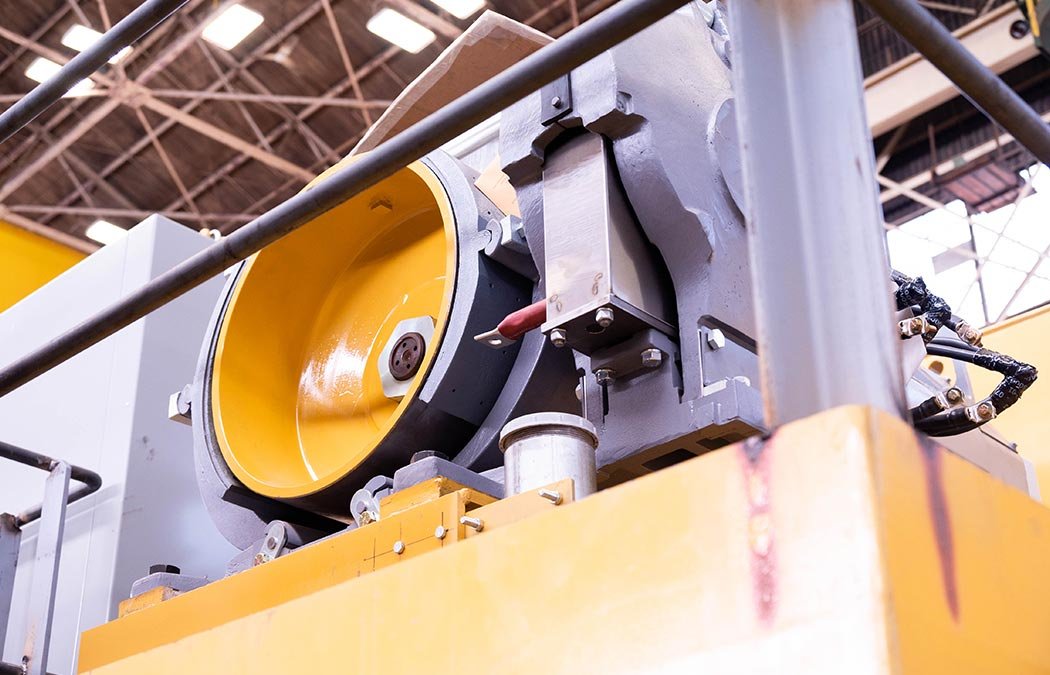
EOT Crane Brake Guide: Types, Inspection, Selection and Maintenance
Quick Answer
Crane brakes should be selected by motion type, torque requirement, duty, fail-safe behavior, maintenance access, environment, and available spares. Buyers should compare brake make, torque rating, lining area, enclosure, release method, serviceability, and test evidence rather than only accepting a generic brake item in the quote.
This guide is for plant maintenance engineers and procurement teams checking whether an EOT crane brake is suitable, serviceable and safe to accept. It explains the common brake types, the symptoms that need attention, what to inspect during maintenance, and what to ask vendors before approving a quote or replacement.
1. Electro-Hydraulic Thruster (EHT) Brakes
These are the industry standard for heavy-duty EOT cranes. They use a small hydraulic pump (thruster) to release the brake shoes against a spring.
Pros:
- Soft Braking: The hydraulic action provides a smooth, cushioned stop, reducing shock loads on the gearbox and structure.
- High Torque: Capable of handling very large loads.
- Durability: Excellent heat dissipation, making them ideal for high duty cycles.
Cons:
- Response Time: Slightly slower to set than DC brakes (milliseconds matter in precision lifting).
- Maintenance: Requires checking oil levels and seals in the thruster.
2. DC Electromagnetic Brakes
These use a magnetic coil to pull a plate and release the brake disc. When power is cut, springs clamp the disc instantly.
Pros:
- Fast Response: Almost instantaneous engagement. Great for precise inching and positioning.
- Compact: Usually mounted on the back of the motor (fail-safe disc brakes).
- Clean: No hydraulic fluid to leak.
Cons:
- Hard Stop: Can be jerky ("snatchy") if not adjusted correctly.
- Heat: The coil can overheat if the air gap is too large.
3. Which One Should You Choose?
For Main Hoists: Use EHT Brakes. The smooth braking protects the gearbox from shock loads when stopping a heavy load.
For Travel Motions (CT/LT): Use EHT Brakes or Soft-Start Drives. Hard braking on travel causes load swing.
For Small Hoists (< 5 Ton): DC Disc Brakes are standard, compact, and cost-effective.
4. Brake Selection Table for Buyers and Maintenance Teams
| Decision point | What to check | Why it matters |
|---|---|---|
| Motion type | Hoist, cross travel, long travel or auxiliary motion. | Hoist brakes must hold suspended load. Travel brakes mainly control stopping, swing and positioning. |
| Rated torque | Brake torque rating, setting range and service factor used by the supplier. | A brake listed only by drum diameter or generic size is not enough for acceptance. |
| Fail-safe action | Spring-applied, power-released behavior and what happens during power loss. | The brake must move to the safe state during electrical failure, not depend on power to hold. |
| Duty and heat | Starts per hour, operating hours, ambient temperature and lining heat dissipation. | Frequent stopping can overheat linings, coils, thrusters or drums if duty is understated. |
| Maintenance access | Air gap, shoe clearance, lining wear, thruster oil, coil condition and adjustment points. | A good brake still becomes risky if it cannot be inspected, adjusted and serviced safely. |
5. Brake Inspection Checklist
Visual and mechanical checks
- Brake lining thickness and uneven wear.
- Drum or disc scoring, glazing, cracks or overheating marks.
- Shoe alignment, spring condition, pins, bushings and linkages.
- Oil leakage, loose fasteners, corrosion and damaged guards.
Functional checks
- Load drift, stopping distance and abnormal delay in brake setting.
- Air gap or shoe clearance against manufacturer limits.
- Thruster release movement or electromagnetic coil release behavior.
- Brake response during emergency stop and power interruption tests where safe and permitted.
6. Symptoms That Need Immediate Attention
- Load drift after stopping: treat as a serious holding-risk symptom until inspected.
- Burning smell or hot brake drum: check dragging brake, incorrect setting, excessive duty or poor ventilation.
- Jerky stopping: review brake setting, travel speed, control sequence and VFD ramping.
- Repeated lining wear: investigate duty, brake sizing, drum condition, release clearance and operator usage.
- Brake not releasing fully: check supply voltage, coil/thruster health, mechanical binding and linkage adjustment.
7. What to Ask the Vendor Before Buying or Replacing a Brake
- Brake make, model, type, rated torque and setting range.
- Design basis for hoist or travel motion, including duty and safety margin.
- Brake drum or disc size, lining material, lining area and replacement part codes.
- Thruster or coil rating, enclosure, supply voltage and ambient suitability.
- Adjustment method, inspection points, spare parts and maintenance instructions.
- Factory test, site test and load-holding acceptance evidence.
8. Related Tools and Next Actions
Use the brake article together with a calculation page and a maintenance schedule. The calculator supports preliminary checks only; final brake selection must come from the crane supplier or qualified engineer.
Maintenance Tip: Check brake lining thickness monthly. If the rivets are exposed, they will score the brake drum, leading to costly repairs.